Preparing a young horse for its first cross-country in eventing
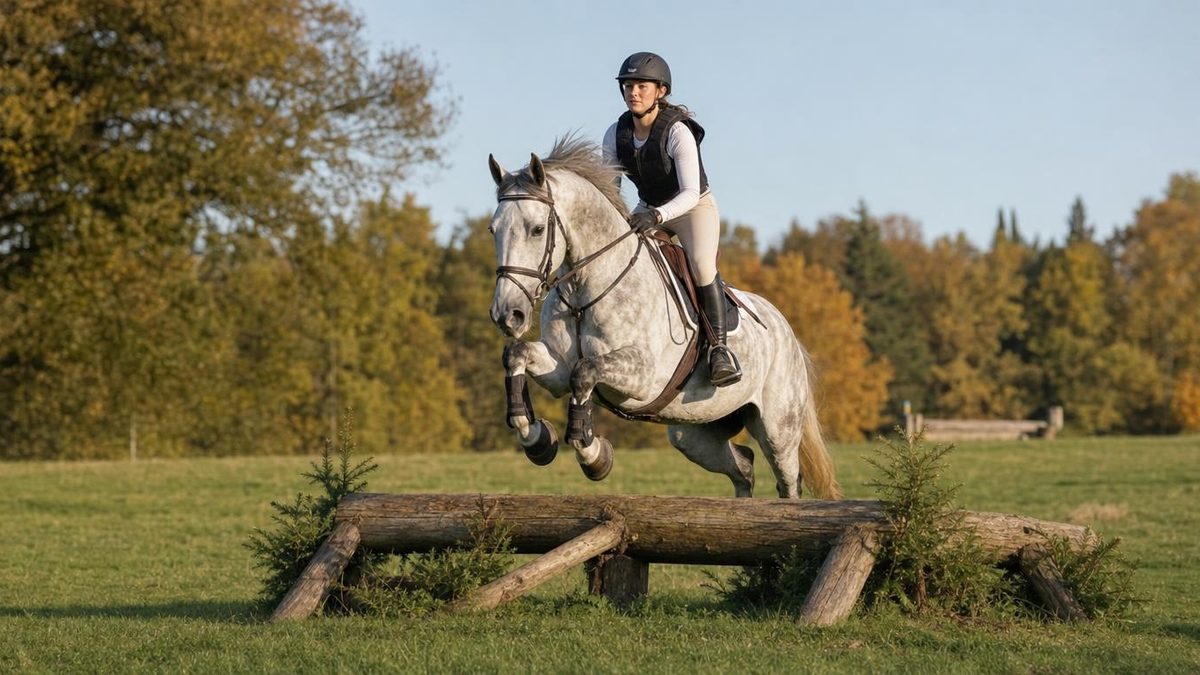
Cross-country is the part of eventing that surprises a young horse most. A show jumping course is colourful and falls down. Cross-country fences are fixed and natural: a ditch in the ground, a step down, a way into water. A horse that meets them for the first time on the day hesitates, and hesitating at a fixed fence is costly.
Start with flatwork and poles
Before its first cross-country, your horse should go forward willingly, turn without losing balance and jump small fences while keeping its rhythm. A horse that stops at arena fences will stop at cross-country fences. Build impulsion and confidence over simple jumps first.
The fences to introduce, one at a time
The ditch
Many young horses stop at a hole in the ground. Show a small ditch in walk, in hand if needed, then ridden. Let the horse look, then ask it to go over. Do not let it turn its back on the fence: it would learn that stopping works.
The drop
Stepping down asks the horse to trust its rider. Start with a step of a few tens of centimetres, in walk or a slow trot, with soft reins so it can lower its neck.
Water
Choose a shallow crossing with a firm bottom. Walk in, next to an experienced horse if you can. Stay in the water a moment, then walk out calmly. Repeat before going in at trot.
Logs and solid fences
A solid fence looks bigger than a pole of the same height. Start lower than what your horse jumps in the arena, on flat ground and a straight line.
Planning the sessions
- One new difficulty at a time: the ditch one day, water another.
- Short sessions: the horse works hard in its head. Finish on a good effort.
- Varied ground: slopes and grass, so the horse learns to gallop outside.
- A lead horse: an experienced companion showing the way reassures a young horse at water or a ditch.
Where to train
Not every yard has a cross-country field, and those that do do not always open it to outside riders. On JumpinSpot, owners list the types of tracks they offer, including cross-country fields when they have them. On the day, prepare the outing like a visit to a new arena: arrive calmly, walk the ground in hand, keep the work short.
Keep reading
Arena footing for young horses: what each surface does
Sand, fibre sand, geotextile, grass: how each surface behaves under a young horse, and what to check before you work on it.
November 10, 2026Overnight stabling on the way to a show: a checklist
What to check before booking a stopover stable: the box, bedding, water, hay, paddock, lorry hook-up, arrival times and special cases.
November 8, 2026