Arena footing for young horses: what each surface does
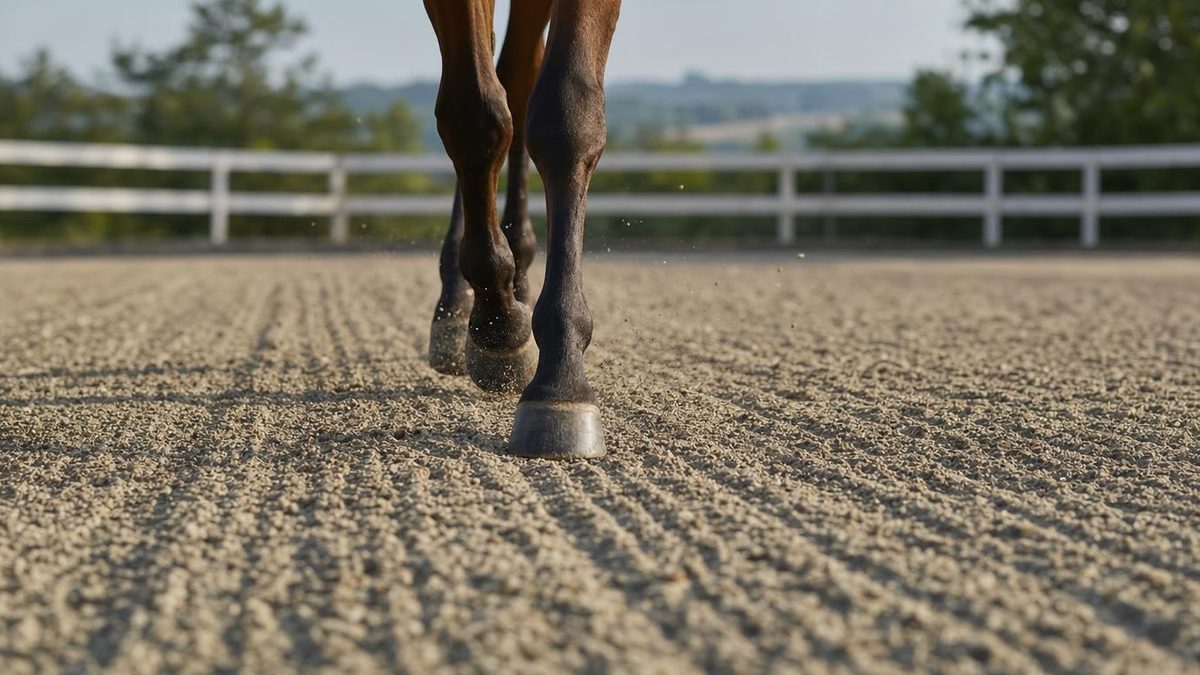
A young horse learns its balance through its feet. Footing that is too deep tires it within minutes, footing that is too hard shortens its stride, and a slippery surface makes it cautious for a long time. When you pick an arena for a session away from home, the surface matters as much as the size or the jumps.
The surfaces you will meet
Sand
The most common surface, and the most variable. Fine, well-watered sand holds together; dry, thick sand gives way. On sand that is too deep, a young horse quickly loses its rhythm and strains its tendons. Ask how thick the layer is and when it was last harrowed.
Fibre sand
Textile fibres mixed into the sand give it grip. The surface stays soft without collapsing and holds its shape on turns, which often makes it the best choice for cantering a young horse on circles. It needs regular care: badly harrowed fibre sand builds ridges along the fence.
Geotextile or wood chips
These absorb shock well and drain fast after rain. They are springier than sand, and some horses lift their feet higher the first time. Allow a few minutes of walk so your horse gets used to it before you trot.
Grass
Dry, short grass gives good grip and prepares a horse for outdoor shows. After rain it turns slippery, especially on turns. With a young horse, keep grass for dry days and wide figures.
What to check on site
- Depth: walk the arena. If your foot sinks more than a few centimetres, the footing is too deep for a long session.
- Evenness: look along the fence and into the corners, where ridges and holes appear first.
- Watering: dry sand is dusty and slips underfoot. Ask whether and when the arena is watered.
- Drainage: puddles that stay after a shower mean the surface holds water. Move the session to another day.
- Frost: in winter, a surface frozen on top is hard and slippery. An indoor school avoids the risk.
Adapt the session to the surface
Footing that differs from home is an exercise in itself. Start in walk on long lines, then trot on wide curves. Watch whether your horse keeps its rhythm or searches for its footing. On deeper ground, keep the session shorter. On firmer ground, limit jumping and repeated canter transitions.
Changing surfaces over the weeks prepares a horse for shows, where it will not choose the ground. Our plan to introduce a young horse to a new arena brings in a different surface from week three.
Footing in an arena listing
On JumpinSpot, each listing shows the type of footing and lorry access. Before you book, compare it with your own arena: a big difference is better kept for a later outing. For the other checks, read our guide to renting a private arena in France.
Keep reading
Preparing a young horse for its first cross-country in eventing
Ditches, drops, water, logs: how to introduce each cross-country fence to a young horse before its first event.
November 13, 2026Overnight stabling on the way to a show: a checklist
What to check before booking a stopover stable: the box, bedding, water, hay, paddock, lorry hook-up, arrival times and special cases.
November 8, 2026