How to introduce a young horse to a new arena
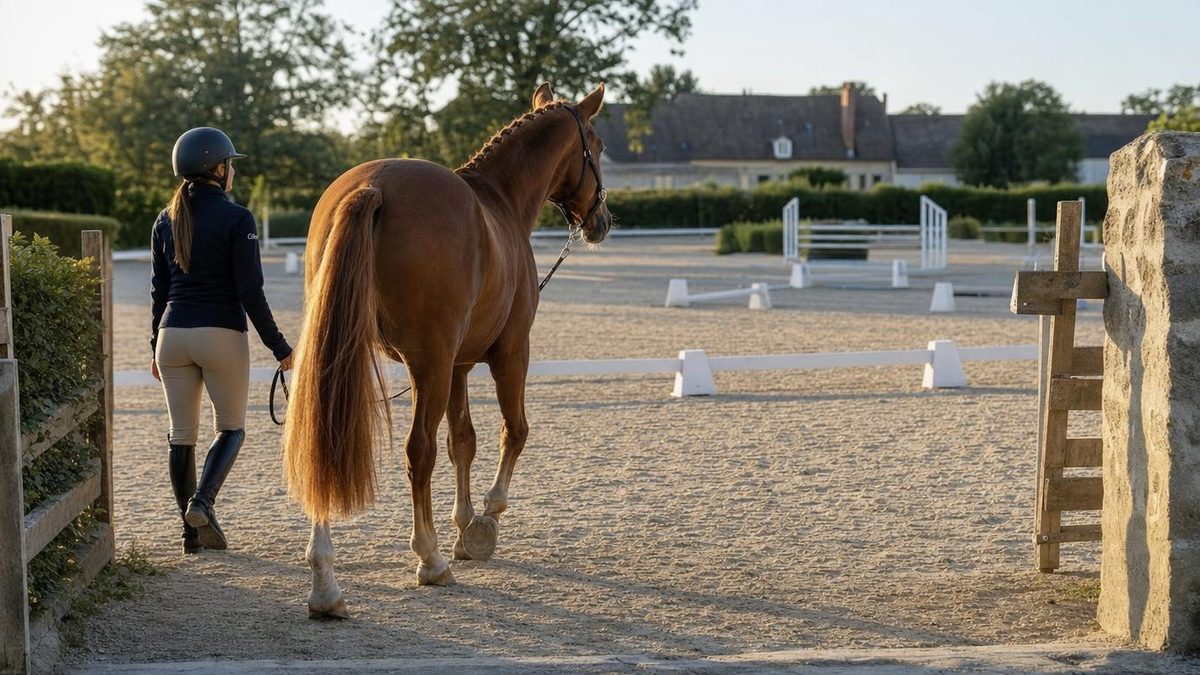
A young horse that only ever works at home learns one arena, not a job. The first time it meets a new place, usually at its first show, everything is new at once: the footing, the fence line, the noise, the smell of other horses. Working in a few different arenas before that day turns the show into one more outing instead of a shock.
This guide covers how to plan those outings, what to do in the first ten minutes on arrival, and how to build the habit over a few weeks.
Why a change of arena matters
Horses read a familiar arena by memory. They know where the corner is, where the gate is, which spot in the hedge moves in the wind. In a new place they have to look and think again. That is exactly the skill you want them to practise calmly, at home pace, before they need it under pressure.
- A different footing teaches the horse to adjust its balance and stride.
- New fences, letters and fillers become normal instead of frightening.
- Loading, travelling and unloading become routine.
- You find out how your horse reacts away from home while the stakes are low.
Before you go
Choose the right arena for the stage your horse is at
For a first outing, pick something close, quiet and simple: an outdoor arena of a size your horse knows, with a footing similar to the one at home. Keep the indoor school with mirrors, or the arena full of colourful jumps, for later visits.
When you look at a listing, check:
- the size in metres, so you know whether there is room for a canter circle;
- the footing (sand, fibre sand, geotextile, grass) and whether it is maintained;
- what is already in the arena: jumps, dressage letters, poles;
- access for your lorry or trailer, and whether you can turn round;
- the house rules: dogs, quiet hours, droppings, equipment to put back.
Each of these checks is explained in our guide to renting a private arena in France.
Book a slot with a margin
Book more time than you plan to ride. A young horse may need twenty minutes in hand before it is ready to be mounted. Arriving late and rushing is the most common reason a first outing goes badly.
Bring what you would bring to a show
Treat it as a rehearsal: the same tack, a hay net, water and a bucket, a head collar and lead rope, boots, and your horse’s passport and health papers. Many owners ask to see the flu vaccination date before they accept a horse they do not know.
The first ten minutes on arrival
- Let the horse look before it works. Unload, stand quietly near the lorry, and let it take in the surroundings.
- Walk the arena in hand. Go round both reins. Stop near anything the horse stares at, let it sniff, then move on.
- Lunge if your horse needs it. Short and calm, to release tension, not to tire it out.
- Get on where the horse is relaxed. Not next to the gate if it keeps looking back at the lorry.
- Start with what it already does well. Walk and trot on large figures before asking anything new.
During the session
Keep the session shorter than at home. The horse is working harder mentally even when the exercise looks easy. Finish on something it has done well, then walk on a long rein so it leaves with a good memory of the place.
Watch for signs that you are asking too much: a high head that does not come down, a horse that keeps calling for others, a tail swishing at every aid. When you see them, go back to something simple.
Build a routine over a few weeks
One outing is useful. A rhythm is what changes the horse. A simple plan for a four or five year old:
- Week 1: a quiet outdoor arena close to home, flatwork only.
- Week 2: the same arena again, so the horse recognises somewhere that is not home.
- Week 3: a new arena with a different footing.
- Week 4: an arena with a few jumps or an indoor school, depending on your horse’s discipline.
Keep notes after each visit: how the horse travelled, how long it needed before it settled, what worried it. After a month you will see a pattern, and you will know what to work on before its first show.
First show a long drive away? Our stopover stable checklist helps you plan the night on the road.
Leave a good impression for the next rider
Owners who open their arena to outside riders keep doing it when visits go well. Arrive on time, pick up droppings, put jumps and letters back where they were, and leave the gate as you found it. A short thank-you message after the visit goes a long way.
Keep reading
Overnight stabling on the way to a show: a checklist
What to check before booking a stopover stable: the box, bedding, water, hay, paddock, lorry hook-up, arrival times and special cases.
November 8, 2026Renting a private arena in France: what to check before you book
Size, footing, lorry access, booking and cancellation terms, house rules and paperwork: the checks to make before renting an arena by the hour.
November 8, 2026